
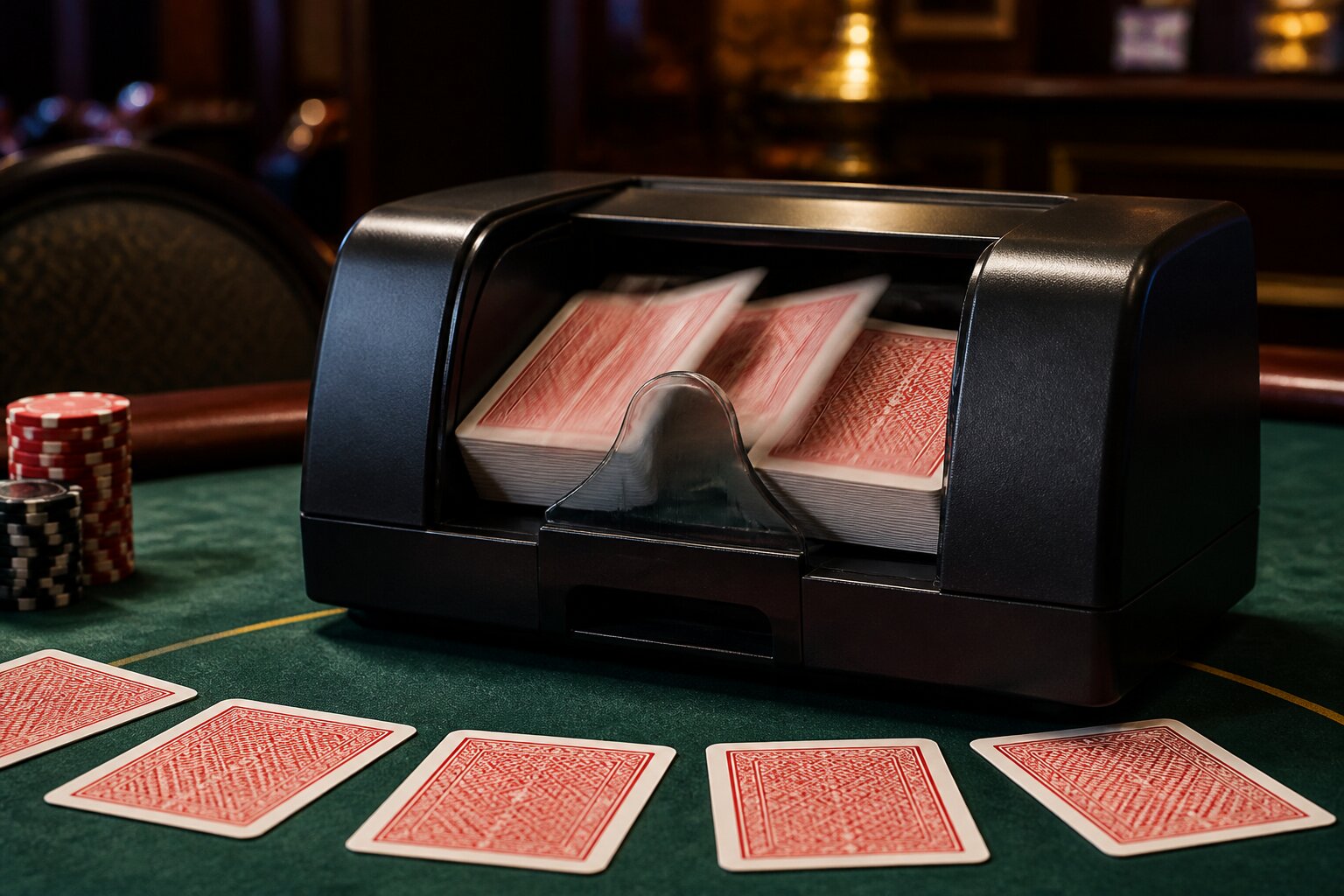
Ever sat at a casino table and wondered if that automatic card shuffler is truly fair? You’re not alone. With so much at stake, it’s natural to question whether these machines give everyone an equal chance—or if something else is happening behind the scenes.
Automatic shufflers are now common in casinos, speeding up play and mixing cards more quickly than a dealer can by hand. In this post we’ll explain how they work, separate myths from facts, and outline the safeguards that protect game integrity. Keep reading to get the full picture of what’s happening inside these devices.
How Do Casino Automatic Card Shufflers Work?
Automatic card shufflers are machines built to mix playing cards consistently and thoroughly. When a dealer places cards inside, the machine doesn’t simply tumble them; a sequence of mechanical and electronic actions divides, interleaves and recombines the cards several times to achieve a random order.
Inside you’ll find rollers, sensors and compartments that guide the cards through this process. The machine’s software controls timing and movement so the same rigorous routine is repeated every time, which is more consistent than hand-shuffling.
Casinos use these machines to speed up games and reduce human error. They also make certain types of cheating much harder by eliminating predictable manual patterns. In regulated markets, devices must meet strict technical and testing standards before they are permitted in play.
Can Shuffle Machines Be Manipulated?
Suspicions about tampering are understandable, but outright manipulation of modern shuffle machines is both difficult and risky. Machines have built-in physical and electronic protections, and any interference with their components is usually detectable.
Staff are trained to notice irregularities and there are routine inspections carried out by the casino and independent testing bodies. Regulatory frameworks demand that hardware and software pass certification and periodic retesting, so an attempt to alter performance would be uncovered quickly.
Because the legal and reputational consequences are severe, intentional manipulation is both rare and unlikely. The controls around the machines exist to maintain fairness for everyone at the table.
We take the integrity of every game seriously and follow the required checks to ensure equipment performs as intended.
What Security Measures Do Casinos Use With Shufflers?
Casinos apply multiple layers of security to keep shuffle machines reliable. Regular audits by independent laboratories confirm that mechanical parts and the controlling software operate correctly and continue to meet standards.
Routine maintenance prevents faults that could affect performance, while staff training ensures employees can spot and report anything unusual. Machine logs and sensors record operations, helping to identify any irregularities for follow-up.
In addition to regulatory testing, operators frequently carry out their own checks, replacing components or updating firmware as needed. These practices reduce the chance of failure and reinforce the safeguards that preserve fair play.
We work to maintain transparency and compliance so players can be confident that machines are functioning properly.
Are All Casino Shufflers the Same?
Shuffle machines vary in capacity and design. Some handle a single deck, others are built for multiple decks used in busier tables. Differences include how cards are fed, the speed of the operation and the internal mechanisms used to interleave cards.
Despite these differences, each approved model must meet the same essential standards for randomness and security in regulated environments. Before machines enter service they are tested for consistent performance, and models that don’t meet expectations are not used.
So while the outward appearance and mechanics may differ, the underlying requirement is uniform: the device must produce an unbiased shuffle every time it’s used.
Common Myths About Casino Shuffle Machines
There are a few persistent myths about automatic shufflers. Misunderstandings often arise because the machines operate quickly and out of view, so it helps to clear up the most common points of confusion.
Are Shuffle Machines Pre-Programmed to Benefit the House?
They are not. Machines used in regulated casinos are tested to ensure they do not favour any outcome.
Certification and testing typically cover:
- checks for predictable patterns in the sequences they produce
- confirmation that the randomisation algorithms meet required technical standards
- verification by independent laboratories and regular regulatory audits
Manufacturers also provide documentation and test reports, and casinos will only use machines that hold the necessary approvals and seals from relevant testing bodies.
Can Players Detect Patterns?
Because each shuffle is independent and the process is designed to eliminate predictability, detecting a reliable pattern from dealing results is not feasible. The randomness is intended to be reset with every shuffle, so past deals do not influence future ones.
Independent testing, ongoing monitoring and statistical sampling of outcomes further reduce any chance of a repeatable sequence emerging. Observing short runs of results at a table will not reveal a meaningful pattern, and longer-term studies are carried out by regulators and testing firms rather than by players.
These clarifications should reassure you that the technology is not engineered to advantage any player or operator.
Do Shuffle Machines Affect Game Fairness?
Shuffle machines exist to protect fairness by removing human inconsistencies from the shuffling process. When properly maintained and certified, they randomise the deck thoroughly so every hand starts from the same impartial point.
Using a machine does not change the rules of the game or alter the mathematical odds; it simply enforces a consistent and impartial shuffle each round. The underlying probabilities and house edge remain those set by the game rules and pay tables, not by the method of shuffling.
The benefits of using a shuffle machine include:
- reduced risk of human error such as improper mixing or accidental card exposure,
- faster turnaround between hands which helps keep play consistent,
- and a clear, repeatable process that regulators can audit.
Operators and regulators help ensure fairness by requiring regular maintenance, routine testing and independent certification of the machines. These measures typically include scheduled inspections, software checks where applicable, and physical safeguards that show evidence of tampering.
For players, a well-managed shuffle machine provides confidence that each deal begins from a random starting point, while for operators it helps protect the integrity of the game in busy or high-stakes environments.
What Do Experts Say About Automatic Card Shufflers?
Independent testing laboratories, industry professionals and regulators have examined shuffle machines to confirm their effectiveness. Their assessments generally find that well-maintained, certified machines produce suitably random shuffles and reduce opportunities for human error or manipulation.
Experts also emphasise the need for ongoing checks: mechanical wear, software updates and environmental factors can affect performance over time, so periodic retesting is a recognised best practice. Operators that follow these recommendations help ensure machines remain reliable in daily use.
Taken together, expert opinion supports the use of certified shuffle machines as a reliable way to preserve game integrity when proper oversight is in place.
We hope this has answered your questions about shuffle machines and given you a clear sense of how they work and why they’re trusted.
**The information provided in this blog is intended for educational purposes and should not be construed as betting advice or a guarantee of success. Always gamble responsibly.