
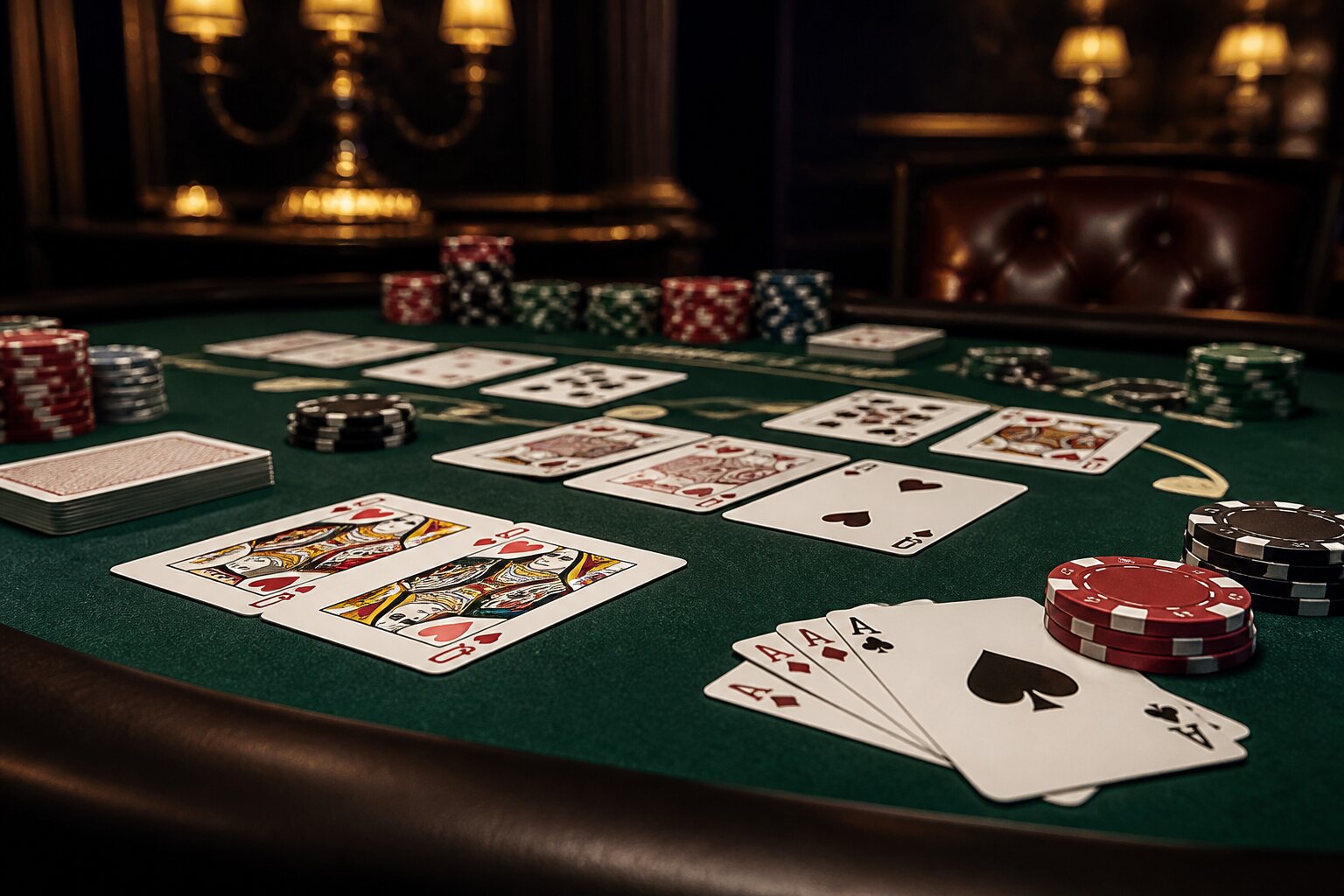
Ever walked into a casino or logged onto a gaming site and wondered which card game to try first? With so many options on offer, it’s easy to feel a bit overwhelmed.
Whether you prefer the tactical play of poker or the paced decisions of blackjack, casino card games offer a wide range of experiences. Read on for a clear guide to the best-loved card games, how they differ and what to expect at the table.
What Are the Most Popular Casino Card Games?
Casino card games have stood the test of time, attracting people who enjoy strategic thinking, social interaction and the challenge of uncertain outcomes. They are found in both land-based casinos and online sites, and cater to a range of tastes and skill levels.
Here are some of the most commonly played games, with a note on what makes each one distinctive.
Blackjack
Blackjack is widely recognised for its straightforward rules and brisk rounds. Players aim to reach a hand total close to 21 without going over, making choices about taking additional cards, doubling or splitting that affect each round’s outcome.
The game combines simple arithmetic with decision-making, so small changes in strategy can influence results. That balance between skill and chance makes it accessible to newcomers while still offering depth for experienced players.
Poker
Poker appears in many forms, from Texas Hold’em to Three Card Poker. Beyond card ranks, poker involves reading opponents, timing bets and choosing when to fold.
These human elements — psychological tactics, bet sizing and table dynamics — are central to the game’s appeal. Variants differ widely in pace and complexity, so players can pick a format that suits their preferred level of challenge.
Baccarat
Baccarat’s simplicity is its strength. Players bet on the “Player”, “Banker” or a tie, and the hand closest to nine wins.
The game’s steady pace and low decision burden make it approachable for first-timers. At the same time, baccarat is a staple in high-stakes rooms, where its straightforward rules allow for clear betting strategies.
Casino Hold’em
Casino Hold’em adapts poker so players try to beat the dealer rather than each other. It keeps poker’s flavour while fitting the structured flow of a casino table.
Rounds involve familiar poker hands, but the head-to-dealer format creates a different strategic focus, emphasising hand strength and the way community cards develop.
Three Card Poker
A faster poker variant that trims complexity so rounds move quickly. It is a popular option for new players wanting a poker-style experience without a steep learning curve.
Because each hand uses only three cards, decisions are more immediate and play moves at pace. This makes it well suited to shorter sessions or busier casino floors.
How Do Poker Games Differ From Other Casino Card Games?
Poker usually centres on player-versus-player interaction and layered decision-making. Betting choices, bluffing and psychology play significant roles, so outcomes can be influenced by skill and reading others as well as the cards themselves.
By contrast, many traditional casino card games, such as blackjack or baccarat, pit players against the house and follow stricter rules. These games tend to be quicker and place more emphasis on the cards dealt rather than prolonged strategy.
Both styles offer satisfying experiences: poker appeals to those who enjoy interaction and longer-term strategy, while table favourites suit those wanting faster rounds and clearer rules. Remember that outcomes are driven by chance and game mechanics, so play these games for enjoyment rather than financial expectations.
Top Table Card Games Found in UK Casinos
UK casinos generally offer a dependable selection of table card games, whether you’re on the casino floor or playing online. Each game brings its own rhythm and etiquette, so it pays to know a little about the options before you sit down.
Blackjack Variants Explained
Blackjack comes in several variants that tweak a few rules while keeping the core aim the same: reach 21 or as close as possible without going bust. Variations such as Classic Blackjack, European Blackjack and Atlantic City Blackjack differ mainly in deck count and dealer actions. Some tables add side bets or adjust rules for splitting and doubling down, which can change how aggressive or conservative players tend to be.
These subtle differences can influence house edge and strategy, so it’s useful to glance at the table rules before joining a game.
Baccarat: The Classic Card Game
Baccarat is easy to follow and plays quickly. Bets are placed on the Player, Banker or Tie, and the dealer follows set drawing rules to determine the winning hand. Different forms like Punto Banco and Mini Baccarat offer the same basic experience in slightly different formats — one might have a smaller table and faster turns, for example — but the essential gameplay remains simple.
Pontoon and Its Unique Rules
Pontoon is a British variation on blackjack that uses its own terminology and conventions. Both of the dealer’s cards are dealt face down, and moves such as “twist” (take another card) and “stick” (stand) are used. Pontoon often pays more for a two-card 21 and includes options like “buy” that alter the usual blackjack flow. It’s a good choice for someone who knows basic blackjack but wants a change of pace and a few extra strategic elements.
If you enjoy a slightly different rule set while keeping the 21 goal, Pontoon is worth trying.
Popular Poker Card Games at the Casino
Poker tables offer variety and social interaction, with formats to suit different preferences and game lengths. Many players enjoy the blend of skill and chance, while others appreciate the opportunity to learn different strategies. Below are the poker types most commonly found at casinos.
Texas Hold'em Overview
Texas Hold’em is a staple of casino poker rooms. Players receive two private cards and combine them with up to five community cards to make the best five-card hand. Multiple betting rounds create tension and opportunity, and reading opponents plays a big part in how rounds unfold.
The structure of the game means position, stack size and timing all matter. Betting rounds occur before and after community cards are revealed, giving space for tactical decisions and bluffing. This format is widely taught and used in tournaments as well as cash games.
Omaha Poker Explained
Omaha resembles Hold’em but adds complexity: players receive four private cards and must use exactly two of them with three community cards. This requirement produces more hand combinations and often results in higher-value hands being in play, which can make the betting rounds feel more dynamic.
Because players hold more hole cards, board textures and shared cards change the way hands develop. Pot sizes can grow quickly and it is common to see larger draws and stronger made hands by the river. Learning to count combinations and manage pot odds is especially useful in Omaha.
Stud and Draw Poker Differences
Stud poker deals a mix of face-up and face-down cards over several rounds, with Seven Card Stud being the most familiar. Players receive some cards face down and some face up, so observation of exposed cards and previous betting gives important information. The game rewards good memory and careful tracking of which cards have appeared.
Draw poker, like Five Card Draw, gives players an initial hand and allows them to exchange cards in the hope of improving it. After a round of betting players discard and draw replacement cards, then another betting round follows. Draw games typically put more emphasis on deception and judgement when choosing which cards to replace.
Each format emphasises different skills:
- Stud games reward memory and observation, because visible cards and betting patterns provide clues.
- Draw games reward judgement about risk and reward, where decisions on which cards to exchange are key.
These poker formats each offer distinct rhythms and strategic challenges, so trying more than one can help you find the style that suits you best.
What Makes Casino Card Games Appealing?
Card games attract players for several reasons beyond the cards themselves. Key draws include social interaction, the mental challenge of decision-making and the atmosphere that surrounds play. The social element, such as chatting at the table, watching how others play and sharing the experience, creates a relaxed and communal feel that many players enjoy.
There is also variety in how games are played: some demand rapid decisions while others reward longer-term thinking. This variety means you can pick a game to match your mood, the company you are with or the amount of mental effort you want to invest.
Learning a new game and seeing your decisions play out is part of the fun. Many players appreciate the mix of skill and chance, and the small improvements you see as you practise can be very satisfying.
Other appealing aspects include:
- a range of stake levels to suit different budgets and preferences,
- the theatre and atmosphere of a casino or card room,
- the social rituals and etiquette that add to the experience.
That said, keeping clear boundaries about time and spending helps the experience remain positive and centred on entertainment. Setting limits, taking breaks and treating play as a form of leisure rather than a way to make money will make sessions more enjoyable and sustainable.
Are Card Game Myths True or False?
Many myths drift around casinos. One frequent belief is that earlier outcomes influence future ones. In fact, each hand or round is independent and governed by the game’s rules or the randomness built into shuffled decks and tested software.
Other myths suggest rituals or charms can change results. There’s no basis for that; fair play comes from well-managed shuffling and certified systems. Finally, while studying strategy can improve how you play, no system guarantees a win every time.
Understanding these realities helps set clearer expectations and lets you enjoy the strategy and social aspects of the games without chasing false beliefs.
How to Choose the Right Casino Card Game for You
Choice comes down to what you enjoy doing at the table. If quick rounds and clear choices appeal, blackjack or baccarat might suit you. If you prefer psychological play and longer sessions, poker variants offer that. Consider also whether you want a game that mostly depends on chance or one where skill and strategy can make a real difference.
Think about pace and complexity. Some games move fast and are simple to learn, while others have more rules and require practice to master. If you are unsure, trying different games in low-stakes play or demo modes lets you test the pace, atmosphere and rules before committing money.
Set personal limits for both time spent and money staked so the activity stays enjoyable. Practical habits help keep play under control: set a budget for each session, take regular breaks, and stop when the session limit is reached.
If you want extra tools to help manage play, the site provides support options and resources, including:
- deposit limits and loss limits
- session time limits and reality checks
- cooling-off periods and self-exclusion
- links to support organisations and advice on safer gambling
Make use of these tools and seek help if gambling stops being fun. Responsible play protects your interests and keeps the experience enjoyable for longer.
Card Game FAQs for UK Players
Choosing a card game or playing in a UK casino can raise practical questions. These answers cover the basics so you can approach games with confidence.
What is the legal age to play card games in UK casinos?
You must be at least 18 years old to take part in casino card games in the UK, whether online or in a physical venue.
Are casino card games fair?
Games are run using regulated equipment and tested software designed to ensure outcomes are unbiased. Casinos operate under oversight that requires fairness and regular checks of systems.
Can I play casino card games for free?
Yes, many online platforms offer demo versions of card games. These let you learn rules and test strategies without a financial commitment.
Do I need to know the rules before playing?
Knowing basic rules makes the experience more enjoyable, especially when stakes are involved. Resources and demo games are useful ways to get familiar before joining a real-money table.
Where can I get support if I’m worried about my gambling?
If gambling stops being enjoyable or you feel it’s causing harm, free support services such as GamCare and BeGambleAware are available, alongside the site’s own control tools and guidance to help you manage play responsibly.
That covers the main points about casino card games and how to pick one that suits you — enjoy exploring the options and choose the games that match your style and comfort level.
**The information provided in this blog is intended for educational purposes and should not be construed as betting advice or a guarantee of success. Always gamble responsibly.