
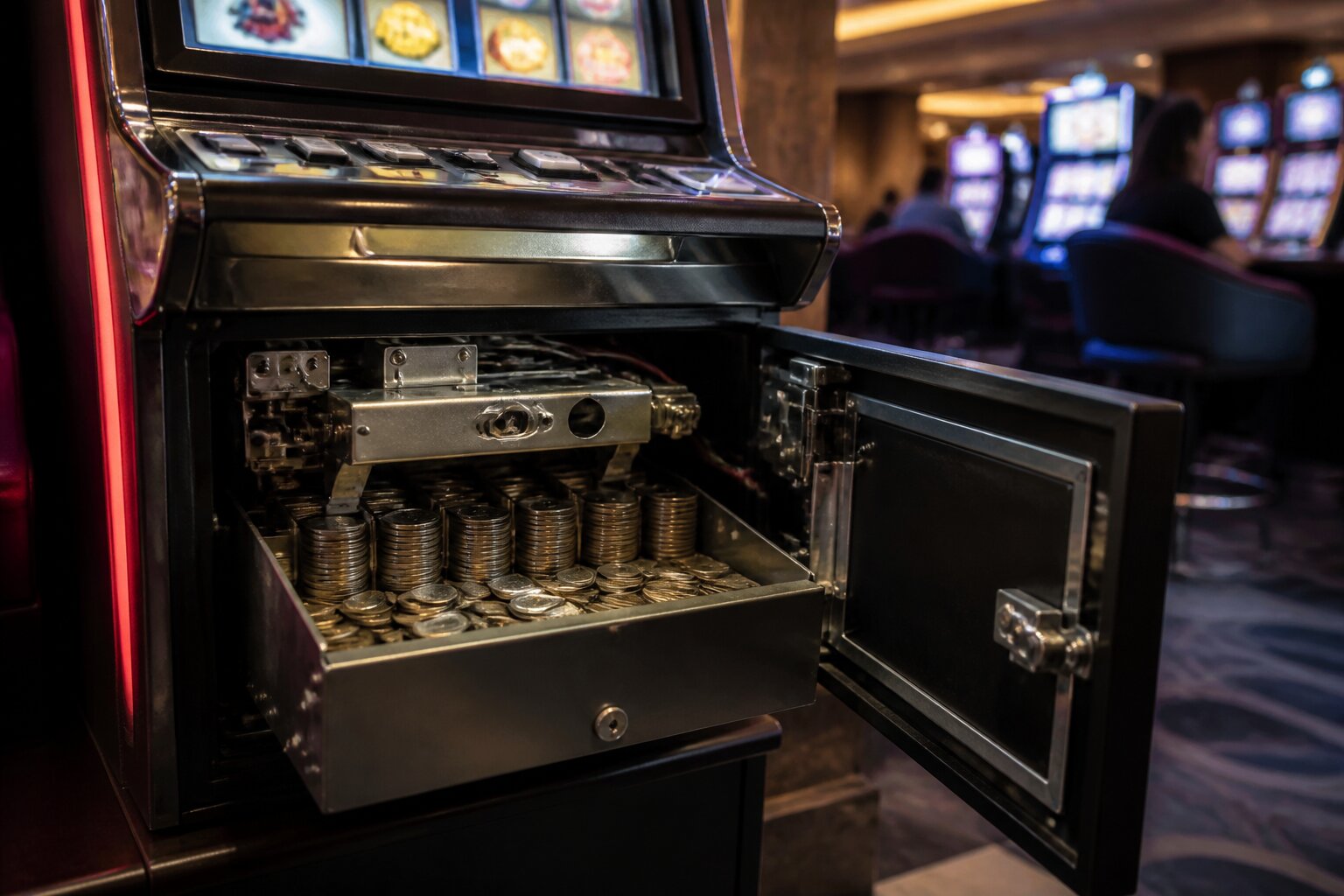
Ever wondered how much cash is kept inside a slot machine? The question has interested people for decades. If you’ve ever sat at a fruit machine and considered its inner workings, the reality behind the reels may differ from common assumptions.
This post outlines, in brief, how capacity is managed, how payouts are set, and the controls that help keep operation fair and secure.
Read on to learn more.
How Do Slot Machines Store Money?
Slot machines are built to keep money secure at all times. When cash is inserted it goes into a locked metal cash box that only authorised staff can access. That physical compartment is robust because it has to withstand regular use and deter tampering.
Many modern machines minimise physical cash altogether. They accept notes and tickets that are stored in secure hoppers or converted immediately into digital credits tied to the machine. Card and ticket systems record every transaction electronically, creating an auditable trail of play and balances.
Regulation plays a big part here: machines are subject to testing and approval so that handling and record-keeping meet required standards. The result is a system where funds are tracked and protected from the moment they enter the machine.
This also affects how capacity is planned, which brings us to the next point about what actually limits how much a machine can hold.
What Determines a Slot Machine’s Cash Capacity?
A slot machine’s cash capacity comes down to a few practical and regulatory factors. Physically, the cabinet size determines how many notes or coins the internal containers can hold. Machines with larger hoppers or multiple compartments can store more before needing servicing.
The machine type matters too. Ticket-in, ticket-out systems and fully cashless terminals significantly reduce the need for large cash stores, since they rely on electronic records rather than bulky containers.
Operators set collection routines so machines are emptied on a schedule before they reach capacity, and regulatory limits influence how much a venue can allow a single machine to store. All of these aspects—physical design, payment method and operational controls—work together to define a machine’s practical capacity.
Understanding capacity helps explain why machines are serviced regularly and why some look bulkier inside than others.
How Are Slot Machine Payouts Calculated?
Payouts are governed by the random number generator (RNG) built into every machine. The RNG produces an unpredictable outcome for each spin, and the machine’s software interprets that result against the game's paytable to decide any award.
Another important figure is the Return to Player (RTP). Expressed as a percentage, RTP indicates how much a game will return, on average, to players over a very long period of play. For example, a 95% RTP suggests that, across many millions of spins, the game will pay back about £95 for every £100 staked. Short sessions can produce very different results, however, because RTP is a long-term statistical measure.
In regulated markets the RNG and RTP are independently tested and certified to ensure they function as claimed. This testing, combined with ongoing compliance checks, helps maintain fairness and transparency in how payouts are calculated.
With this technical background, it’s easier to separate fact from the common misunderstandings about how machines behave.
What Happens When a Slot Machine Is Full?
When a machine reaches its cash limit, its internal systems flag the condition to staff. This might appear as an on-screen alert or an internal indicator that prompts a routine service call.
Trained personnel follow secure procedures to remove and replace the cash box or ticket stacker. Collections are usually handled by two staff members and are recorded immediately. The removed contents are taken to a secure counting area where everything is logged and reconciled against the machine’s electronic records.
This maintenance work is part of normal operations and does not alter how a machine pays out. It simply ensures the equipment remains secure and functional for both players and the venue.
Slot Machine Capacity vs. Casino Security
Venues apply strict controls to cash handling because the way a machine stores value matters for overall security. Access to machine internals is tightly restricted to authorised personnel only, and physical safeguards such as locked drop boxes and sealed cash cassettes are used to limit opportunities for tampering.
Surveillance and recordkeeping are central to that protection. Key elements include:
- CCTV coverage of gaming areas and cash-handling points
- Audit trails recorded by the machines and venue systems
- Secure counting areas where takings are verified and logged
- Tamper-evident bags and controlled key management
Staff receive training on handling procedures and recordkeeping so that collections and servicing remain consistent and traceable. Training covers practical steps such as two-person count routines, use of seal numbers, completed logbooks and immediate reporting of irregularities.
Independent audits and regulatory checks provide further oversight, confirming that processes meet agreed standards. Regulators and internal auditors review both the physical controls and the transaction records to ensure reconciliations balance and any discrepancies are investigated promptly.
For players, these controls mean that the money in machines is managed transparently and securely, and that any interventions are carried out in a controlled way. Clear procedures and visible safeguards help maintain trust in the integrity of payouts and the fairness of play.
Are There Myths About Slot Machine Payouts?
There are several persistent myths about how slots operate. One is that machines follow cyclical patterns—paying out more or less depending on recent activity. Because each spin is determined independently by the RNG, past spins don’t influence future outcomes and machines do not “remember” previous play.
Another misconception is that operators can change payouts at will during play. In regulated environments, machines are tested and sealed so their payout behaviour cannot be altered casually; any changes must be approved and certified.
These clarifications help focus on what actually matters when choosing a game: the stated RTP, the volatility of the title (how often and how large wins tend to be), and the certified nature of the software behind the scenes.
What Should Players Know About Slot Machine Payouts?
When approaching a slot, a few simple points make the experience clearer and more comfortable.
- Know the RTP: Look for the game’s RTP to understand how it performs over the long term. Remember, RTP is a statistical average and won’t predict short sessions.
- Set your limits: Decide in advance how much you are prepared to stake and stick to that plan to keep play manageable.
- Play for enjoyment: Treat slots as entertainment; focus on the experience rather than expecting a specific financial outcome.
- Access support: If play becomes difficult to manage, confidential help is available from specialist organisations such as GamCare and BeGambleAware.
Keeping these ideas in mind helps players engage with machines in an informed way while preserving control over their activity.
This is the essential picture of how slots hold and pay out money: secure storage and certified software govern the process, while transparency and operational procedures keep everything accountable and clear for players.
**The information provided in this blog is intended for educational purposes and should not be construed as betting advice or a guarantee of success. Always gamble responsibly.