
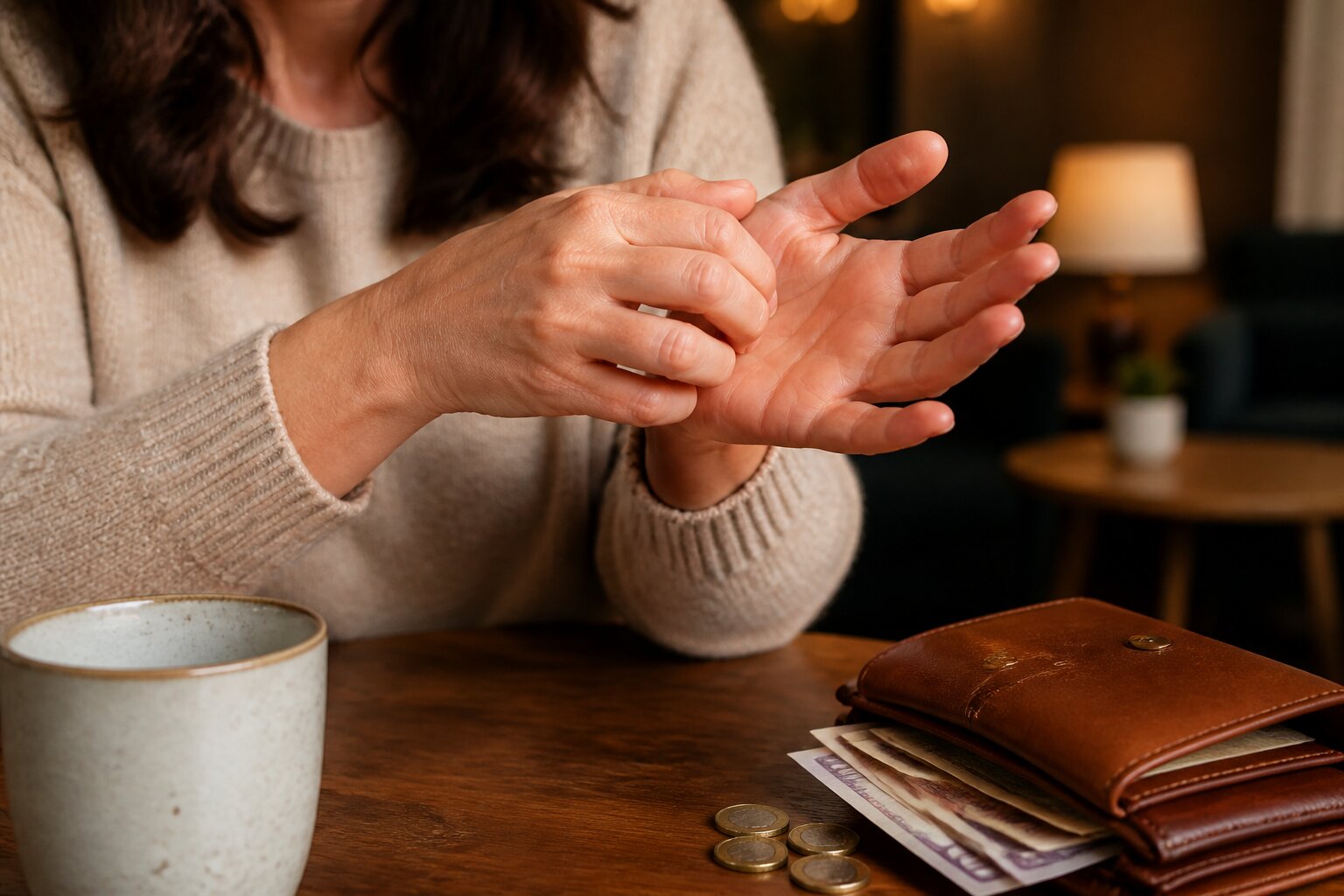
Have you ever felt your right hand itching and wondered if something exciting was on the horizon—perhaps a win on the lottery? This old belief appears in many cultures and can be oddly persistent in conversation and folklore.
Before you decide to buy a ticket, it helps to understand where the idea comes from and what else might explain the sensation. Read on to explore the stories behind the superstition, the medical and environmental reasons for itchy hands, and how to approach gambling with clear information and sensible habits.
Common Beliefs Surrounding Right Hand Itching
Across many traditions, an itchy right palm is said to signal incoming money, while an itchy left palm is thought to mean an outgoing payment. Families pass down small rituals tied to these signs—rubbing the palm on wood, or making a tiny gesture thought to “lock in” the outcome. These customs show how people have historically tried to make sense of everyday sensations by attaching a larger meaning to them.
Such tales vary in detail from place to place: some regions assign particular days for the omen to be true, others add small superstitious acts. These stories are part of cultural history and provide a glimpse into how communities create shared meaning. However, an itch itself is a bodily sensation with many ordinary causes; treating it as a predictor of financial events can lead to unrealistic expectations. The next section explains what medical science says about itching.
Is There Any Scientific Basis for Right Hand Itching and Money?
Medical research does not support any link between itchy palms and financial events or lottery outcomes. Itching is a sensory response triggered by nerve endings in the skin; it can arise from dry skin, allergic reactions, eczema, irritation from soaps, or from temperature changes. Stress and some internal conditions can also increase skin sensitivity.
Studies into gambling and chance-based games show that outcomes are governed by randomness and probability, not by physical sensations. When choosing whether to play the lottery, it is more useful to consider odds and costs than to rely on physical signs. With that understanding of the science and of how games of chance operate, it’s clearer why an itch cannot predict a draw; next, we’ll look directly at the question of lotteries.
Does Right Hand Itching Predict Lottery Wins?
No physical sensation, including an itchy right hand, can predict or affect the result of a lottery draw. Lottery outcomes are produced by processes designed to be unpredictable and unbiased, with each entry having a purely chance-based probability of success. Any feeling or ritual does not change those underlying mechanics.
People sometimes interpret coincidences as confirmation of a belief—if something good happens after an itch, it can feel meaningful. That sense of pattern is understandable, but it does not confer predictive power. For readers interested in how lotteries are kept fair, the next section outlines the regulatory and technical controls that protect the integrity of draws.
Cultural Differences in the Meaning of Right Hand Itching
Different cultures attach different meanings to the same sensation. In parts of the UK and Ireland an itchy right palm commonly signals an incoming sum, while in South Asia the sign may carry additional rituals or be linked to particular days. Caribbean traditions sometimes include a gesture to secure the outcome, and in parts of Eastern Europe the left and right can be reversed or associated with meeting someone rather than money.
These variations show how a single physical sensation can be woven into many narrative frameworks. They add texture to social life and family stories but do not alter the mechanics of chance-based games. With those cultural patterns in mind, it’s helpful to consider other explanations for itching that are purely physical.
Other Explanations for an Itchy Right Hand
Most episodes of hand itching are best explained by health or environmental factors rather than any symbolic meaning. Everyday causes are common, usually straightforward to address, and often clear once you look at recent activities or products you have used.
Medical Causes of Itching
Skin conditions such as eczema, dermatitis, psoriasis or fungal infections can make the palms itch. These conditions may cause dry, flaky or red skin and can be uncomfortable for long periods if untreated. Allergic reactions to lotions, jewellery or detergents may produce sudden irritation, with symptoms appearing shortly after contact with the offending substance.
In some cases, systemic conditions such as diabetes or liver problems may be accompanied by itchy skin. This type of itching can be more widespread and persistent, and it might not respond to ordinary moisturisers. If itching is persistent, intensifies, or comes with other symptoms like a visible rash, swelling, blistering or changes in general health, it is sensible to consult a healthcare professional for diagnosis and treatment.
A clinician can suggest suitable tests, recommend topical treatments or prescribe medication where appropriate. Self-care measures can help in many cases, but professional advice ensures any underlying medical issue is identified and managed correctly.
Environmental Triggers for Hand Itchiness
External factors often play a big role. Frequent handwashing, harsh soaps, contact with cleaning chemicals, central heating in winter, or a sudden change in humidity can all dry the skin and provoke itching. Repeated exposure to water and detergents strips natural oils from the skin, leaving palms more vulnerable to irritation.
Seasonal pollen or household allergens can also trigger reactions, sometimes in people who have no prior history of sensitivity. Simple measures such as switching to milder cleansers, using moisturiser regularly, wearing gloves when doing chores, and avoiding known irritants often reduce symptoms noticeably.
Understanding these medical and environmental causes helps separate everyday health issues from symbolic interpretations. If health is not the issue, you might still be curious about whether beliefs can affect outcomes in games of chance; the next section tackles that question.
Should You Act on Superstitions About Right Hand Itching?
Superstitions can be interesting cultural touchstones, but they are not a reliable guide for financial choices. When it comes to the lottery or other forms of gambling, decisions are best based on clear information about odds, stake sizes and personal budgets. Responsible play means setting limits and treating gambling as entertainment rather than a way to resolve financial issues.
Keeping gambling within affordable boundaries protects against harm and helps maintain perspective. If a sensation or ritual adds a light, harmless layer of fun to an occasional ticket, that is one thing—but if beliefs encourage spending beyond one’s means, they become a risk. The following section explains how game integrity is safeguarded so you can see why superstitions cannot influence results.
Myth-Busting: Can Superstitions Affect Lottery Results?
Superstitions do not influence lottery or betting results. Modern lottery operations use regulated systems and independent checks to ensure every draw is unbiased. Approved equipment is used, audited procedures are followed and oversight from regulatory bodies is in place so outcomes are driven by probability and properly administered random processes, not by external behaviour or personal signs.
Because results are determined by these controlled systems, rituals and beliefs do not alter the mathematical probabilities or give any player an advantage. Feelings that certain behaviours bring luck are understandable and part of human culture, but they do not change the odds or the fair operation of the game. Responsible play means understanding that luck is random and that no method or routine can improve expected returns.
If itching or similar symptoms are causing concern beyond folklore, it is sensible to consider medical reasons and seek appropriate care. Persistent, severe or unusual symptoms should be checked by a healthcare professional so any treatable condition can be diagnosed and managed. The final section explains when to consult a doctor.
When to See a Doctor
Medical advice should be sought if hand itching persists beyond a few days, becomes severe, or is accompanied by redness, swelling, blistering, pain, or other unusual signs. A clinician can assess whether the cause is a skin condition, allergic reaction, infection or a symptom of a broader medical issue, and can recommend appropriate treatments or tests.
Addressing the physical cause ensures comfort and health without relying on symbolic explanations. With that settled, you can enjoy cultural stories as part of social tradition while making practical, informed choices about spending and play.
**The information provided in this blog is intended for educational purposes and should not be construed as betting advice or a guarantee of success. Always gamble responsibly.