
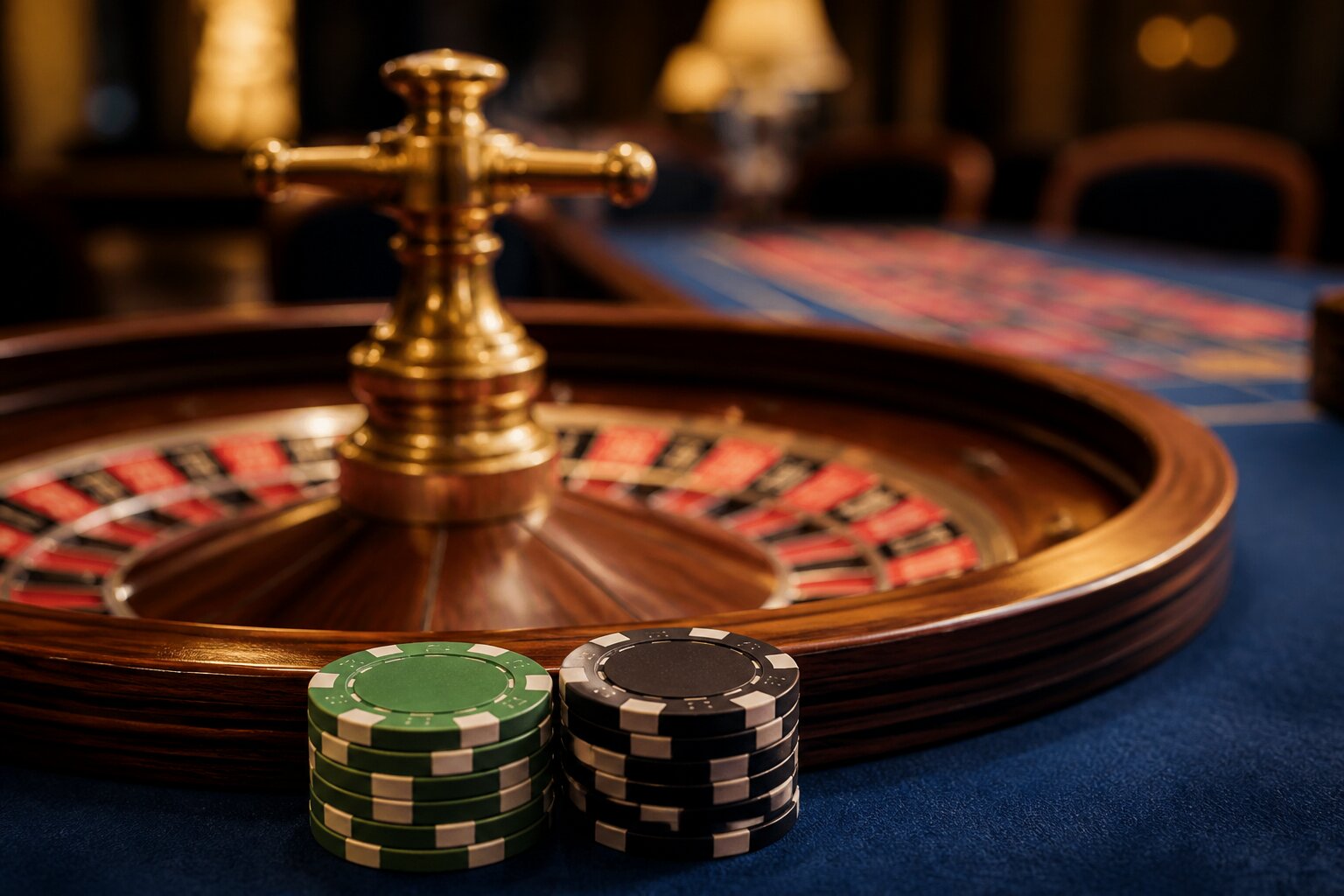
If you've ever watched a roulette wheel spin, you’ll know it draws attention quickly — but not all wheels are the same. Some feature a single green zero, others include a second green double zero, and that small difference changes the maths behind every bet.
This article explains how single zero (European) and double zero (American) roulette differ in layout, odds, house edge and payouts, so you can weigh up which version suits your play style. Read on to see how each element affects what you can expect at the table and why those differences matter.
Understanding Single Zero and Double Zero Roulette
Single zero roulette has numbers 1 to 36 plus a single green zero, making 37 pockets overall. The double zero version adds an extra green double zero so the wheel contains 38 pockets. Those extra pockets are the reason the two games feel and play differently.
Both versions use the same basic betting options — inside bets on specific numbers or small groups, and outside bets such as colours, odd/even or dozens — and the same fixed payouts for each bet type. The presence of one or two green pockets, however, shifts the mathematical probabilities for every bet. This distinction is the foundation for the rest of the comparisons ahead, where we examine layout details, odds and how the house edge changes with each wheel. That context will make the numbers in the following section easier to follow.
Core Differences Between Single Zero and Double Zero Wheels
The primary structural difference is the number of green pockets: one on single zero wheels, two on double zero wheels. That alone alters the total outcomes and therefore the chances attached to each bet. Single zero wheels have 37 pockets; double zero wheels have 38.
There are also differences in the arrangement of numbers and the table bets offered. The numbers are ordered differently between the two wheels, which can affect the distribution of high and low numbers around the rim. Double zero tables commonly include a “five number” or “top line” bet that covers 0, 00, 1, 2 and 3 — a bet not found on single zero tables. Conversely, some single zero tables incorporate rules such as La Partage or En Prison for even-money bets, which can reduce losses in certain spins.
These layout and rule variations influence both the feel of the game and the mathematical edge the casino holds, which leads us into a closer look at how the odds change between the two formats.
How Do the Odds Differ Between the Two Games?
Odds in roulette follow directly from the number of pockets. On a single zero wheel, the chance of the ball landing on any one number is 1 in 37; on a double zero wheel it is 1 in 38. For outside bets like red/black or odd/even, the presence of one or two green pockets creates respectively one or two losing outcomes that reduce the probability of a win below 50%.
Every bet type — straight-up, split, street, corner, dozens, columns and outside bets — has a probability calculated from the wheel’s total pockets. For example, a straight-up bet has a 1/37 probability on a single zero wheel and 1/38 on a double zero wheel. Those small changes in probability are what make the house edge different between versions, which we explore next.
Comparing House Edge: Which Version Is Better for Players?
The house edge summarises the casino’s long-term advantage as a percentage. It comes from the gap between true odds and the fixed payout offered for each bet. Over many spins, that percentage describes the average share of stakes the house will retain, rather than what any individual player can expect on a single session.
House Edge on European (Single Zero) Roulette
On a single zero wheel, the standard house edge is 2.70%. In practical terms, that percentage reflects the average returns the casino expects to retain over a very large number of bets, and it applies consistently across most standard wagers on that wheel.
Because the difference between true probability and payout is smaller on a single zero layout, players face a lower expected loss rate per spin compared with double zero wheels. That does not guarantee short-term results or remove variance, but it does mean the game is mathematically fairer to the player over time.
House Edge on American (Double Zero) Roulette
On a double zero wheel, the house edge rises to 5.26% for most bets because of the extra pocket. The presence of both 0 and 00 increases the divergence between the true odds and the fixed payouts, so the casino’s long-term advantage is notably larger on this layout.
The “five number” or “top line” bet unique to this layout carries an even higher edge, typically around 7.89%, making it one of the least favourable bets on that table. That particular wager illustrates how specific rules and bet options can widen the house edge beyond the standard rate for other bets.
Lower house edge on single zero wheels is a clear mathematical advantage for players; the next section shows how that advantage interacts with fixed payout rates. Remember that house edge is a long-term statistic and does not predict short-term wins or losses.
Roulette Payouts: What Can Players Expect?
Payouts in roulette are fixed by bet type and do not change between single and double zero wheels. Knowing these payouts alongside the odds clarifies the relationship between risk and reward.
For straight-up bets on a single number the payout is 35 to 1, while split bets (two numbers) pay 17 to 1, street bets (three numbers) pay 11 to 1 and corner bets (four numbers) pay 8 to 1. Outside bets such as red/black or odd/even pay 1 to 1, and dozens and columns pay 2 to 1. These figures remain the same regardless of whether the wheel has one or two green pockets.
Because the payout rates are identical but the number of possible outcomes differs, a winning bet on a double zero wheel is slightly less likely than the same bet on a single zero wheel. In other words, identical returns cover a different probability distribution depending on the wheel type, which is why house edge and choice of variant matter when comparing expected value.
Why Do UK Casinos Prefer Single Zero Roulette?
In the UK, single zero roulette is the common standard. This preference reflects both regulatory expectations and customer familiarity: players in the region generally recognise the single zero layout as the conventional format. Regulators and operators favour formats that are familiar to local players because consistency supports clear consumer information and easier comparison of games.
Casinos also opt for single zero tables because the game’s lower house edge is broadly perceived as fairer by many players, which helps maintain customer satisfaction. A lower house edge is seen as offering better value from a player perspective, and that perception can make tables and online lobbies more attractive without changing the fundamental risk profile of the game.
These practical and market reasons explain why single zero wheels are widely found across venues and online platforms operating in the UK. Operational simplicity, customer expectations and regulatory alignment all contribute to the prevalence of this format. The following section addresses common misunderstandings that can cloud those comparisons.
Myths About Odds and Payouts Debunked
Several persistent myths distort how people view roulette. One is the idea that betting systems can beat the game’s mathematics; systems that increase bets after losses, for example, do not alter the underlying probabilities and cannot overcome the house edge. Another is the notion that a number is “due” after a run of non-appearances — each spin is independent, so the odds for a number remain the same every time.
Believing in predictable patterns or guaranteed recoveries can lead to poor decisions. Payouts are fixed and do not change the chance of winning. Keeping a clear view of these facts helps players make informed choices about which table and which bets align with their preferences and tolerance for risk.
Choosing the Best Roulette Version for You
Deciding between single and double zero roulette comes down to how much weight you give to a lower house edge versus specific table rules or the availability of particular bets. Players who prioritise marginally better long-term odds tend to favour single zero wheels, while others might be drawn to the variety of bets or table layouts offered on double zero tables.
Personal risk tolerance, budget and the style of play you enjoy should guide your choice. Play at stakes that suit you and be mindful of the odds and payouts discussed earlier when selecting bets. If gambling ever stops being enjoyable or begins to cause harm, help is available from recognised support services. Make choices that keep the experience controlled and sustainable.
**The information provided in this blog is intended for educational purposes and should not be construed as betting advice or a guarantee of success. Always gamble responsibly.