
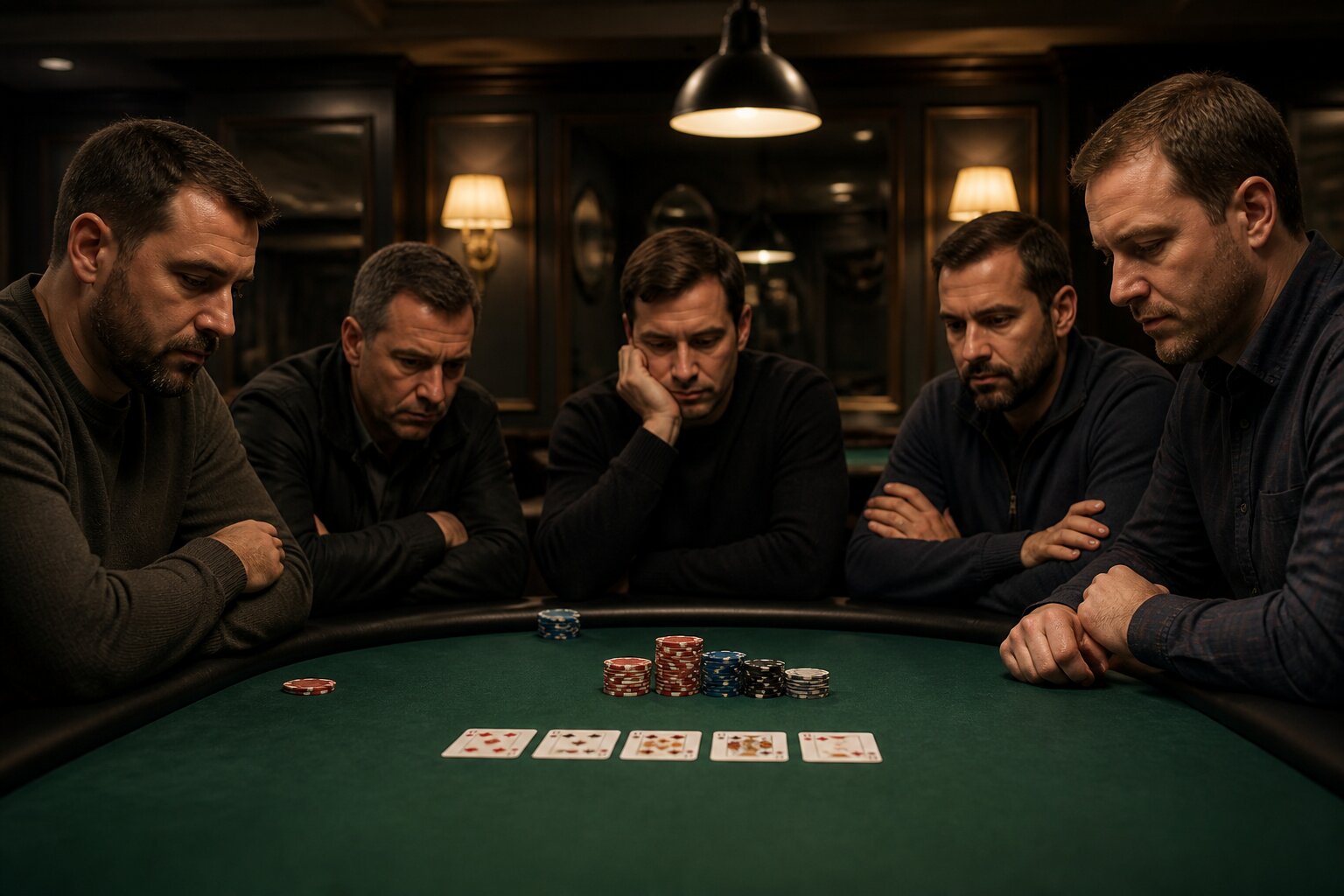
Ever been unsure what happens when everyone at the table folds? You are not alone — that moment can feel oddly anticlimactic if you do not know the rules. This article clarifies who wins, when a showdown is required and what folding really means, so you can read the table with confidence.
Knowing these rules helps you avoid costly mistakes and makes your decisions at the table clearer. Read on for practical explanations and examples that cut through the confusion.
Who Wins the Pot When Everyone Folds?
If every player except one folds, the remaining player wins the pot immediately. There is no need for a showdown and the winner does not have to reveal their cards. When opponents fold, they give up any claim on the pot for that hand.
In live games the dealer will push the chips to the remaining player, while in online games the software will award the pot automatically. A player who wins by everyone else folding may choose to show their cards, but they are under no obligation to do so.
This rule keeps play moving and means that sometimes winning a hand is about timing and how the betting unfolds, not only about the cards you hold. Smart betting, position and reading opponents can all influence whether others fold, so strategy and psychology often matter as much as the cards.
Do You Still Have a Showdown if Everyone Folds?
A showdown happens only when two or more players are still involved in the hand after the final betting round. If every other player folds before that point, there is no showdown. The lone player collects the pot without exposing their cards.
When a genuine showdown does occur, remaining players must reveal their hands so the best one can be determined under the game’s hand-ranking rules. This typically happens after the final bet or raise is called and all betting is complete.
Situations that lead to a showdown include:
- Two or more players still active after the final betting round.
- A call of the final bet that leaves more than one active hand.
If you find yourself alone at the end of the betting, there is usually no obligation to show what you had. You may choose to reveal your cards, but you may also muck them and simply take the pot. In cases where hands are shown, ties are settled according to the rules in play, with the pot split as required.
What Does "Folding" Mean in Poker?
Folding means a player chooses to discard their cards and withdraw from contention in the current hand. Once a player folds, they cannot win the pot and they forfeit any bets they have already placed in that betting round. Folded cards are usually placed face down into the muck; they are out of play and generally cannot be retrieved or shown.
A fold is a strategic decision rather than an admission of error. It ends the player’s involvement in that hand but preserves their remaining chips for future hands. Folding can also simplify decision making and reduce the risk of larger losses in unfavourable situations.
Players commonly fold for several practical reasons:
- They believe their hand is unlikely to win against opponents’ likely holdings.
- They do not wish to call a bet that would expose too much of their chip stack.
- They want to conserve chips for later hands or better opportunities.
- They prefer to avoid marginal confrontations where the outcome is uncertain.
Remember that once you fold, the action moves on without you for the remainder of that hand. In some formats, such as tournaments, the timing and consequences of folding can have strategic implications for your position and chip management.
How Do Folding Rules Differ in Poker Variants?
The basic idea of folding is common to most poker variants, but specific procedures and timing depend on the game. In Texas Hold’em and Omaha, for example, folding simply ends your participation in that hand. The differences usually lie in betting structure, the number of shared cards and the way rounds proceed, which can affect when folding is most appropriate.
Before joining a new game, it is sensible to check the variant’s betting rounds and any house rules so you understand when folding is permitted and how it interacts with blind and ante structures.
Now that you grasp how folding fits into different games, it helps to clear up a few widespread misunderstandings about folding and showdowns.
Common Misconceptions About Folding and Showdowns
One misconception is that folding always means you have made a mistake. That is not true. Folding can be a disciplined, optimal choice to protect your stack and preserve your ability to play future hands. Knowing when to fold is a key part of sound long term decision making.
Another misconception is the belief that every hand finishes with a showdown. In practice, many hands end when the other players fold and the pot is awarded without card exposure. Winning without a showdown is a normal and legitimate outcome, particularly when you apply pressure effectively or conserve chips in marginal situations.
People sometimes assume there is a perfect, risk-free method to decide when to fold. Poker involves probabilities, player behaviour and the specific betting situation, so decisions balance these factors rather than following a single fail-safe rule. Good folding decisions consider:
- the strength of your hand relative to the board,
- the tendencies and bet sizing of your opponents,
- your current stack size and tournament or cash game situation.
Remember that poker blends skill and chance: no strategy guarantees a win every time. Play responsibly and be mindful of the risks involved.
What Should Players Do When All Others Fold?
When you find yourself the only player left, take a moment to assess the table dynamics rather than simply moving on. The immediate action is straightforward: you collect the pot and continue to the next hand. What follows is useful to notice for future play.
Stay observant and patient. Watching how opponents react and learning their tendencies can pay dividends. A calm approach helps you gather information about their betting patterns and how frequently they fold to pressure.
Keep limits in mind. Play within set budgets and be aware of how you feel while playing. If ever you have concerns about your play or need support, organisations such as BeGambleAware provide confidential advice and resources. Playing with clear limits helps maintain enjoyment and keeps the game sustainable.
This covers what happens when everyone folds, how showdowns work and how folding operates across games. With these rules and ideas in mind, you should feel more confident reading hands and deciding when to stay in or pass.
**The information provided in this blog is intended for educational purposes and should not be construed as betting advice or a guarantee of success. Always gamble responsibly.