
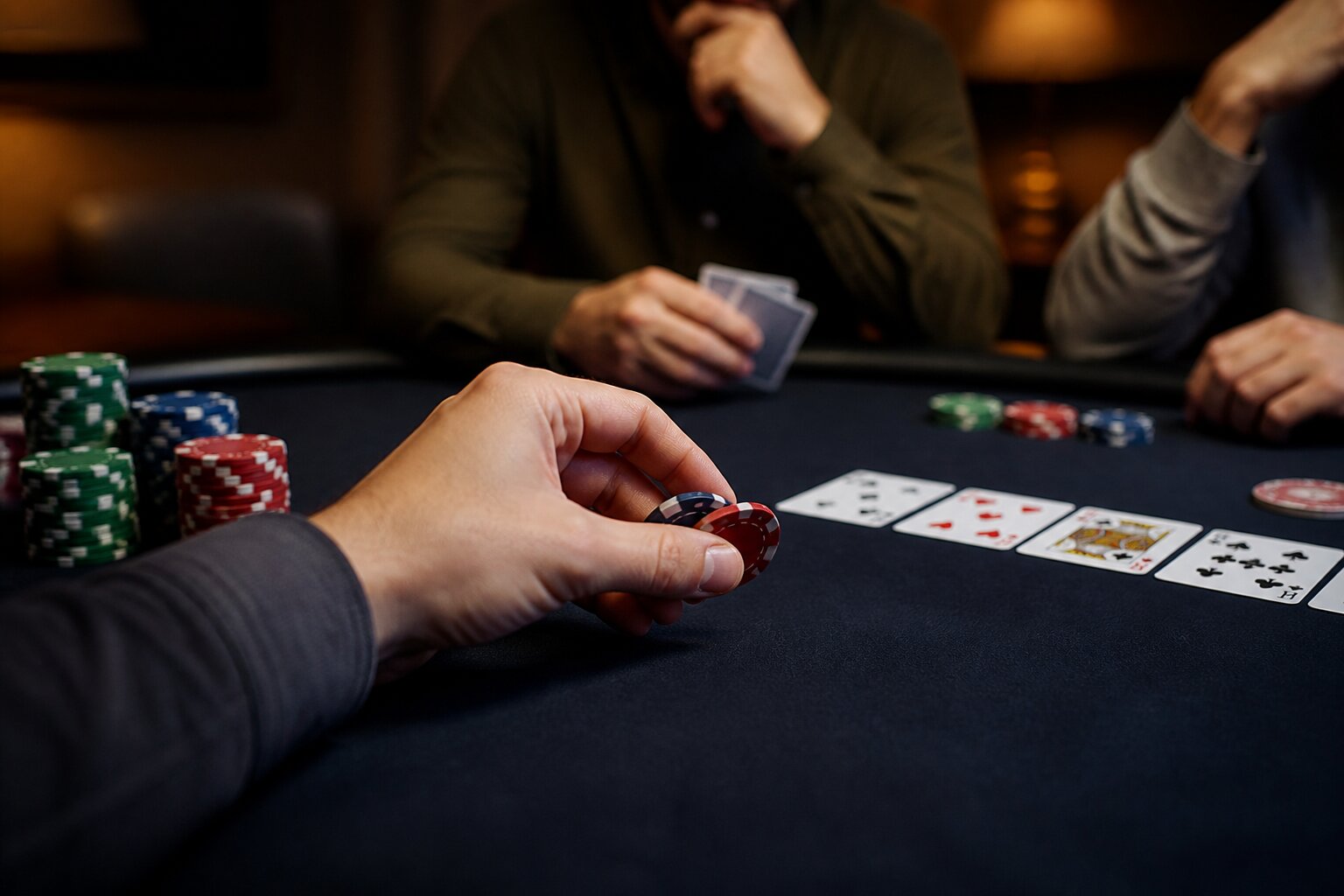
Ever watched a poker hand and wondered how players seem to know exactly when to bluff or hold back? There's more going on than meets the eye, and one clever tactic can change the course of an entire game.
Poker isn't just about the cards you're dealt—it's about understanding what those cards mean for your opponents, too. That's where the idea of a "blocker" comes in; it can tip the balance between folding, calling or representing strength.
Curious about how one card in your hand can make all the difference? Read on to learn what a blocker is and how players use blocker bets to shape pots and influence opponents.
What Does a Blocker Mean in Poker?
A blocker in poker is a card you hold that reduces the number of combinations of strong hands your opponent can have. If you hold the ace of spades, for instance, that specific ace cannot appear in anyone else’s hand, and that fact affects the maths of what hands remain possible at the table. Blockers are especially useful when the board shows draws or paired cards that would otherwise allow opponents to make very strong hands.
Using blockers is less about guaranteeing an outcome and more about refining probabilities. They inform decisions: whether to slow-play, to bet small to test an opponent, or to fold in the face of heavy pressure. The next section explains how those single-card effects change the way a hand develops.
How Do Blocker Cards Affect Poker Hands?
A blocker alters the landscape of possible hands by removing certain combinations from the deck. For example, if the board contains three hearts and you hold one of the remaining hearts, the number of potential flush hands others can have is smaller. That reduced combination count affects how you assess the likelihood of facing a top-tier hand.
This information can change betting choices. When a blocker makes extreme hands less probable, a player might opt for a measured bet rather than folding outright, or check with the intent to call a small wager. On the other hand, blockers never rule out an opponent’s strong holding completely—opponents can still have other combinations or hidden holdings—so they must be considered alongside position, stack sizes and how the hand has been played so far. Coming up, we'll look at how those considerations translate into the specific tool known as a blocker bet.
Blocker Bets Explained: What Are They?
A blocker bet is a deliberately modest wager used to shape the pot and gather information when holding a card that weakens an opponent’s potential top hands. It is not a probe for big value nor an all-in shove; instead, it sets a controlled price to continue the hand while testing an opponent’s resolve. The bet aims to prevent facing a large raise that would force a difficult decision with a marginal holding.
Players use blocker bets particularly when the board is threatening—say, several cards that could complete a straight or flush—and they hold a card that makes the absolute nuts less likely for others. The size of the bet is chosen to discourage large raises but still entice calls from worse hands, or to induce a fold that preserves chips. The following section explains when these bets are most effective and why players choose them in specific moments.
When and Why Are Blocker Bets Used?
Blocker bets commonly appear on the turn and river, where the possible strength of hands crystallises and the pot size matters more. When the board shows possible combinations—four to a flush or a paired board where full houses are possible—a small bet can be a pragmatic way to manage risk while keeping the pot within comfortable limits.
Players use blocker bets to achieve several aims: to force opponents into paying to continue, to extract information about strength without overcommitting, or to deny opponents a free card that could beat them. In some cases, the blocker bet persuades an opponent to call rather than raise, letting the bettor see a showdown for less. It’s also a tactical option against opponents who tend to bet big only with premium hands; the blocker bet can prompt a fold or an awkward call from them. Next, concrete examples show how this plays out in familiar game types.
What Are Common Examples of Blocker Bets?
Blocker bets occur across community-card games but behave differently by format because of hand construction and combination counts. The central idea is the same: a player makes a bet that both blocks specific strong hands from existing and shapes opponents' perceptions, often at a relatively modest cost. How that plays out varies with the number of hole cards, the texture of the board and the typical ranges players assign to each other.
Blocker Bets in No Limit Hold'em
In No Limit Hold’em, imagine the turn completes a four-card flush draw on the board. Holding the ace of that suit prevents the nut flush from existing for any opponent. A small river bet can represent the top flush or an overpair while actually serving as a blocker bet: it controls the pot and forces opponents to show strength before committing more chips.
Because Hold’em uses only two hole cards, blockers can have an outsized psychological effect. The ace of a suit not only reduces combinations of the nut flush but also makes straights or expensive two-pair holdings less likely in an opponent’s perceived range. Players frequently use this to take down pots cheaply, to gather information, or to avoid bloated pots against multiple callers when they do not hold a strong value hand.
Blocker Bets in Pot Limit Omaha
Pot Limit Omaha increases hand complexity because each player holds four hole cards, creating many more possible combinations. A blocker such as an ace of a suit on a coordinated board still reduces the chance of the absolute best flush, but players must weigh more permutations. A modest bet here can be useful to narrow reveals and avoid big confrontations on later streets, where multi-way action often inflates pots quickly.
The extra hole cards mean other hidden holdings can still make the nuts despite a visible blocker, so the blocker’s preventative power is generally weaker than in Hold’em. That makes sizing and timing more important. Small bets can still achieve similar goals: they discourage marginal draws, extract information and keep the pot manageable when one wants to avoid a large, uncertain call.
These examples show how the same principle adapts to different formats, and how sizing, position and board texture influence whether a blocker bet is the right tool. Next, we will contrast blocker bets with another common betting approach so their respective purposes are clearer.
Blockers vs Value Betting: What's the Difference?
Blocker bets and value bets are both deliberate wagers, but their goals differ. A blocker bet is defensive and informational: it seeks to control the pot and probe whether an opponent truly has the strongest hand. The bettor is often prepared to see a cheap showdown rather than risk facing a larger bet.
Value betting aims to extract chips when holding a hand believed to be best. The player sizes bets to be called by worse hands, maximising long-term gains. Where a blocker bet can look like strength but primarily protects the bettor, a value bet intentionally builds the pot because the bettor expects to be ahead.
Understanding the distinction helps when choosing which style to employ in a given spot. With that clarity, consider how blockers influence attempts to represent strength through bluffs or semi-bluffs.
Can Blockers Influence Bluffing?
Blockers can make a bluff more credible by reducing the combinations an opponent might hold. If the community cards suggest strong possible holdings and you hold a card that thwarts those holdings, you can represent a made hand with a slightly higher chance of success. The blocker does not guarantee a fold, but it narrows the opponent’s options and can change their decision calculus.
Still, bluffing remains an uncertain element of play. Even with a blocker, an opponent may hold unexpected holdings or call for strategic reasons. Evaluating opponent tendencies—whether they fold to aggression, call down thinly, or raise light—matters just as much as the blocker itself. The following section addresses common misunderstandings about blockers so their role is not overstated.
Common Misconceptions About Blockers
A frequent error is treating blockers as decisive advantages. They only change the probability distribution of opponents’ hands; they do not eliminate possibilities. Another misunderstanding is assuming blockers make certain hands impossible; in practice they reduce combinations rather than remove all risk. Finally, some believe blockers are an advanced-only tool. While experienced players use blockers more precisely, any player can incorporate the concept simply by recognising when a hole card reduces key opponent combinations.
Keeping these points in mind prevents overreliance on blockers and helps integrate them sensibly into broader considerations like position, bet sizing and opponent reads. With that balanced perspective, it becomes easier to decide whether blockers should factor into a given choice.
Should You Always Consider Blockers in Poker?
Considering blockers can add useful nuance to decision-making, but they are one element among many. In some spots they offer meaningful insight and help you control pots or shape the action; in others they are marginal and need not distract from core strategic choices. The best use of blockers is selective: apply them where they change the probabilities enough to affect bet sizing or calling thresholds, and ignore them where their impact is negligible.
Above all, approach poker as an activity to be enjoyed with sensible limits. Manage stakes in line with personal finances, set clear session boundaries and prioritise play that remains entertaining rather than risky. By combining an understanding of blockers with solid bankroll management and attentive table play, decisions become better informed and the game stays sustainable for the long term.
**The information provided in this blog is intended for educational purposes and should not be construed as betting advice or a guarantee of success. Always gamble responsibly.