
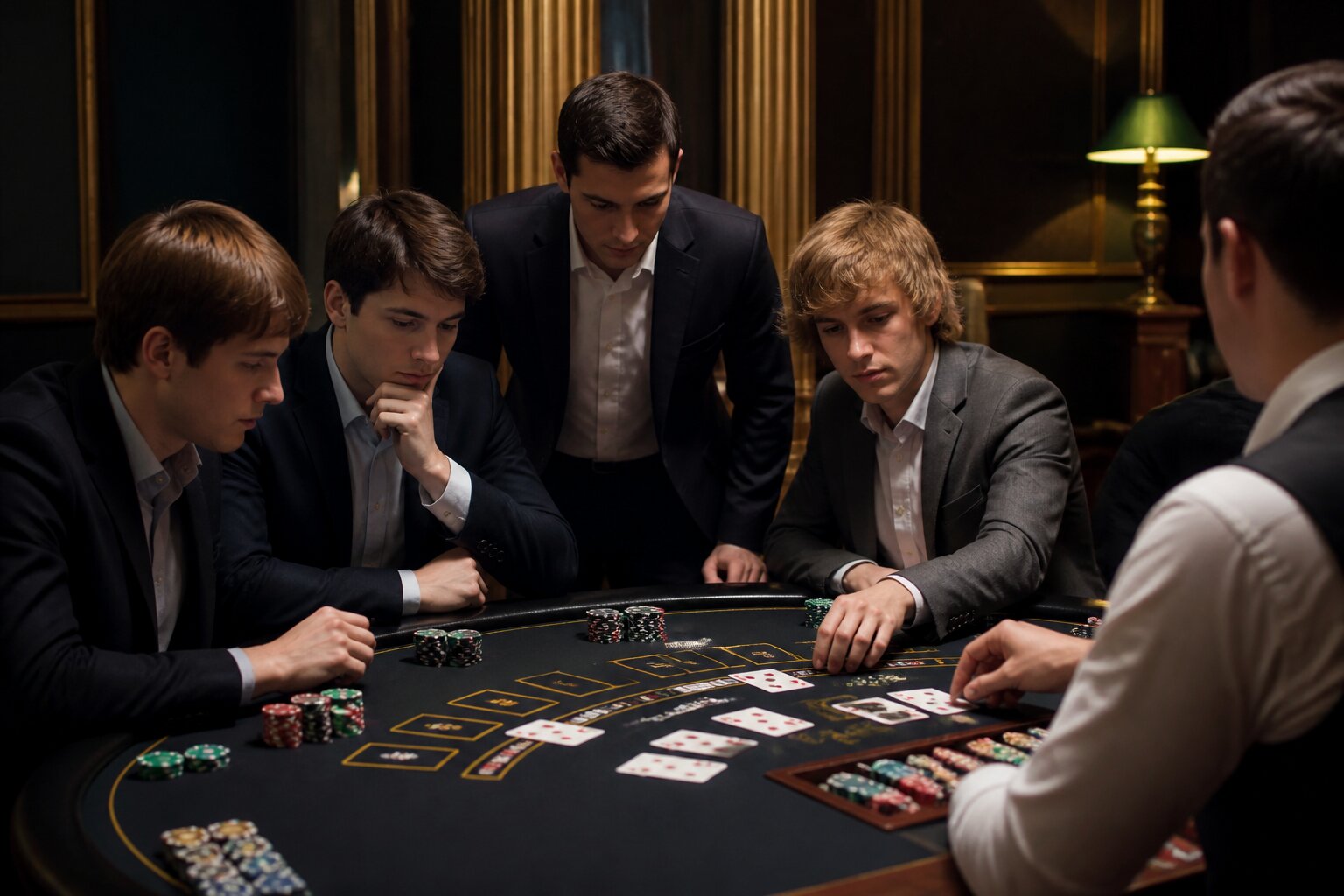
The MIT Blackjack Team is one of the most well-known stories in casino history, attracting attention for its use of card counting, teamwork and statistical analysis. Over the years, the group's achievements have been widely reported, although some aspects of their story have become difficult to separate from popular myths and fictionalised accounts.
This guide explores who the members of the MIT Blackjack Team were, how they generated their reported earnings, and what many of the key figures have gone on to do since the team disbanded. It also examines the claims surrounding their success, addresses common misconceptions, and looks at the lasting influence the team has had on popular culture.
Read on to learn more.
Who Were the MIT Blackjack Team Members?
The MIT Blackjack Team was formed by students and recent graduates from MIT and other Boston universities. Membership shifted over time; players rotated in and out, and several smaller playing groups operated under the same overall organisation.
Some of the better-known figures included:
Bill Kaplan: An organiser who introduced professional structure and management to the team.
Jill Hunter: One of the prominent female players, noted for her skill at team play.
John Chang: Manager and trainer who helped keep operations coordinated.
Jeff Ma: A player whose experiences later informed popular accounts of the team.
Mike Aponte: A leader who combined playing with recruiting and mentoring new members.
These names only hint at a larger group. The team placed emphasis on thorough training, strict roles at the table, and disciplined bankroll management so that the whole operation could function smoothly across many casino trips.
How Did the MIT Blackjack Team Make Their Earnings?
The team’s edge came from card counting, a statistical technique that tracks which cards remain in the deck to estimate when the odds favour the player. Rather than relying on solitary experts, they used a coordinated team approach: spotters would quietly track the count, signalling when conditions were favourable, and more aggressive players would then increase their bets.
What made them effective was not a single trick but a system of roles, practice, and risk control. Players trained to conceal behaviour that might attract attention, and managers organised money and logistics so the group could sustain longer campaigns. Casinos responded by tightening surveillance and changing procedures, so the environment the team exploited in the 1980s and 1990s was not static.
While the method can shift expected value in a player’s favour under certain conditions, it also involved variance and periods of loss. For anyone reading about the team and considering casino play, it’s sensible to treat gambling as entertainment, set clear limits, and not stake more than you can afford to lose.
Where Are the MIT Blackjack Team Members Now?
Many former team members moved into business, technology, education and writing, applying analytical and managerial skills learned during their blackjack years to more conventional careers. A number helped found or advise startups, some joined established firms in operations or analytics, and others pursued teaching, public speaking or authorship. These paths show a broad move from short-term, high-pressure work in casinos to steadier professional roles.
Key Figures: Current Careers and Activities
Bill Kaplan
Kaplan translated team management experience into entrepreneurship and investment, helping start companies and offering business advice. He has been involved in venture projects and acted as a mentor to founders, applying team-building and risk-management techniques from his blackjack days to corporate contexts.
John Chang
Chang continued in technology and operations, occasionally speaking about strategy and team dynamics. He has worked in roles that emphasise systems, process improvement and leadership, and he sometimes shares insights on how disciplined approaches and clear communication supported the team’s work.
Jeff Ma
Ma moved into consulting and sports analytics, wrote about his experiences and helped develop tech ventures. He has combined storytelling with data science in public talks and consultancy, translating probability and decision-making skills into models used in sport and business settings.
Mike Aponte
Aponte entered education initiatives focused on numeracy and practical skills, and he gives talks about discipline and teamwork. His work often centres on helping young people develop quantitative confidence and on promoting structured practice and ethical conduct in competitive environments.
Jill Hunter
Hunter has kept a lower public profile and is believed to have focused on a professional career outside gambling. Reports suggest she pursued steady employment and private interests, applying the analytical and collaborative habits formed on the team to other sectors.
These trajectories illustrate how skills can transfer to many fields beyond casinos. Typical examples include:
- Discipline and work ethic developed through rigorous practice and coordination.
- Probabilistic thinking and quantitative analysis used in decision making.
- Team coordination and leadership applied to business and education.
- Risk management and resource allocation for entrepreneurial ventures.
Moving from the team’s methods to their later lives shows a clear shift. Most members left professional gambling behind and built successful, sustainable careers in a range of mainstream industries.
Did the MIT Blackjack Team Really Win Big?
Contemporary reports and interviews indicate the team won substantial sums at various points, with aggregated figures across years often described as being in the millions. Exact totals are hard to verify: winnings were distributed across many players and trips, and record-keeping varied.
Wins were interspersed with losses, and the team’s profitability depended on disciplined bankroll management and careful selection of when and where to play. As casinos adapted, the opportunities that once existed became harder to exploit. The team’s history is best read as one of calculated risk and organisation rather than unbroken success.
If you’re considering casino games, remember that outcomes vary and past performance does not promise future results. Treat play as entertainment, keep spending within set limits, and stop if it stops being enjoyable.
What Myths Surround the MIT Blackjack Team?
Myths have grown up around the team, spurred by dramatized accounts in books and films. One frequent misperception is that members never lost; in truth, they experienced both significant wins and notable setbacks. Another is that card counting guarantees big returns — the reality involved training, teamwork and careful financial controls, and even then the environment could change suddenly as casinos adapted.
Some narratives suggest anyone can replicate the team’s success quickly, but the team invested considerable time in recruitment and training, and their approach relied on coordinated roles and discipline. The myth-making tends to focus on glamour, while missing the operational complexity and the limits they encountered.
Considering the myths alongside the facts gives a clearer picture: the MIT story is valuable for what it teaches about teamwork and analytical thinking, not as a simple recipe for making money.
How Has the MIT Blackjack Team Influenced Popular Culture?
The team’s exploits captured public imagination and influenced how people view blackjack and advantage play. Their story reached a wide audience through books and films, and it sparked broader interest in probability, strategy and the psychology of group operations.
Books such as Bringing Down the House blended reportage with narrative flair, bringing the techniques and personalities to readers who might never have encountered them otherwise. Likewise, dramatic film adaptations distilled the story into a more cinematic form, further amplifying public curiosity.
This cultural attention has a double edge: it popularised discussion about advantage play while often simplifying the realities involved. Still, the legacy is clear — the MIT team helped put strategic thinking at the centre of a conversation about casino play, and their story continues to be a reference point in discussions about teamwork and applied mathematics.
**The information provided in this blog is intended for educational purposes and should not be construed as betting advice or a guarantee of success. Always gamble responsibly.