
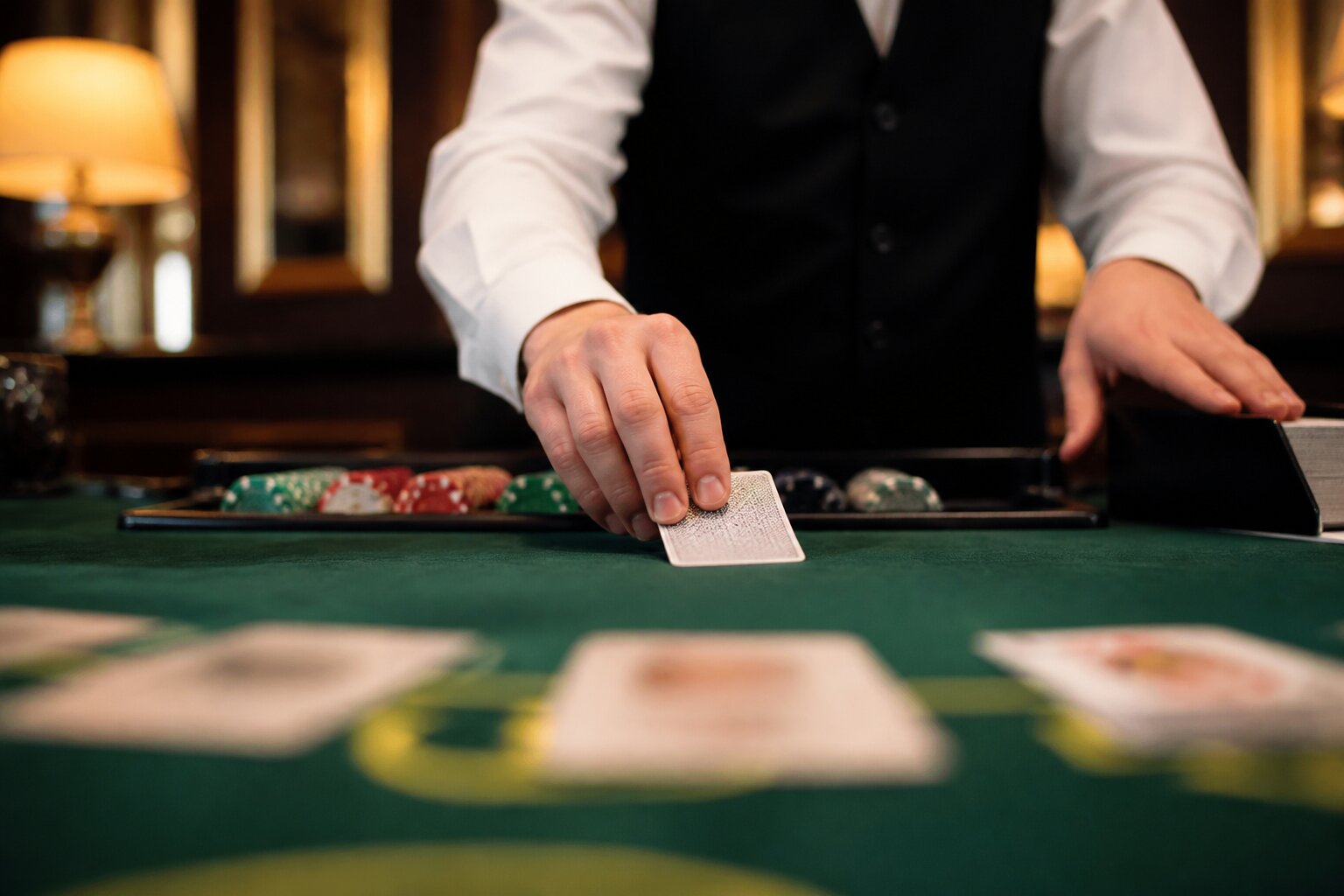
Have you ever sat at a blackjack table and seen the dealer slide the top card straight into the discard tray before the first hand is dealt? That action, called “burning” a card, is a routine part of card handling that often piques the curiosity of newcomers.
There is a clear purpose behind this and other dealer procedures: a mix of practical handling, security and consistent game management. In the sections that follow we’ll explain what burning means, why it happens, how it fits into wider card-handling practices and what it means for players.
To begin, let’s look precisely at what “burning” a card involves and when it occurs at the table.
What Does It Mean to "Burn" a Card?
To burn a card is simply to remove the top card from the deck or shoe and place it face down in the discard tray without ever revealing or using it in play. This happens at defined points in the dealing sequence, typically immediately after the shuffle and cut but before cards are dealt.
The burned card remains out of circulation for the rest of that shoe; it is not reintroduced until all cards are gathered and reshuffled. Dealers perform this action openly and according to the casino’s procedures so players can see that the card is discarded rather than hidden or set aside for later use. This small, controlled step sets the tone for how the rest of the dealing will proceed.
The Main Reasons Dealers Burn Cards in Blackjack
Burning cards serves practical and security purposes. It is a deliberate part of the overall card-handling routine and contributes to consistent, rule-based management of the shoe. The practice is standardised so that everyone at the table, including staff and regulators, understands what to expect and why it is done.
Below are the core reasons this practice exists and the safeguards it supports.
Preventing Cheating and Card Tracking
Removing the top card reduces the chance that someone could use knowledge of the deck order to predict forthcoming cards. Techniques such as marking cards, tracking during a shuffle, or attempting to memorise positions rely on a predictable sequence; burning a card disrupts that sequence and narrows opportunities for manipulation.
Dealers are trained to carry out every step in full view so any attempt to interfere becomes harder to conceal. Visible, consistent procedures make it easier for pit staff and auditors to check that the game is being run correctly and that no unauthorised actions have occurred.
Ensuring Fair Play for All Players
Alongside security, burning helps preserve a common standard of fairness. It introduces an extra element of uncertainty into the dealing process, which helps ensure outcomes are determined by the established rules and probabilities rather than any exploitable pattern.
That structure is part of what regulators and casinos expect in order to maintain transparent, auditable games. With those measures in place, it is easier for the table to run smoothly and for players to understand the rules that govern play.
How Are Cards Burned in a Typical Blackjack Game?
In practice, the burn comes immediately after the shuffle and cut. The dealer slides the top card straight into the discard tray face down, then proceeds to deal the first round of cards. In shoes that hold multiple decks the same basic routine applies; only the top card is removed at that specific moment.
Dealers are taught a consistent sequence—shuffle, cut, burn, deal—so each shoe follows the same visible pattern. Live online blackjack with a human dealer mirrors this approach, while automatic shufflers and continuous shuffling machines alter when and how cards are mixed but still rely on transparent, recorded procedures. Understanding this order makes table play more predictable from a process point of view and reduces confusion about why that single card disappears before play begins.
Is Burning Cards Standard Practice in All Casinos?
Burning is widely used across casinos, though the precise details can vary. Some venues burn a single card at the start of each new shoe; others include additional burns during long sessions or specific game formats. House rules, the dealing system in use and local procedures determine the exact practice.
Whatever the variation, the underlying aim remains the same: consistent, auditable card handling that minimises opportunities for irregularities. The small differences in method do not change the purpose of the burn, but they can be worth noting if you regularly play at different venues. Next we’ll cover what happens to those discarded cards once they’ve been removed.
What Happens to Burned Cards During the Game?
Once discarded, burned cards are kept in the discard tray with the other used cards and remain out of play for the duration of the shoe. They are not shown to players and are only reintroduced to the deck after all cards are collected and a full reshuffle occurs.
Treating burned cards exactly like other discards keeps the card pool transparent and straightforward to audit. Dealers and pit staff can quickly account for cards at the end of a shoe, and surveillance records show the same visible trail for every burned card. With the handling clearly recorded and the cards segregated, the shoe progresses without ambiguity or special exceptions.
Dispelling Myths: Does Burning Cards Affect Your Chances?
There are some common misconceptions that burning could change the probabilities for a given hand. In reality, burning one top card is a neutral handling step and does not alter the mathematical odds of the game beyond the simple removal of a single unknown card. Card distributions and the basic probabilities of blackjack outcomes remain governed by the composition of the remaining cards in the shoe.
Because the burn is performed before any cards are dealt and is not revealed, it does not provide information that can be used by players to alter strategy in a reliable way. The action is best viewed as a housekeeping and security measure rather than something that shifts game dynamics. With that cleared up, it’s useful to see how burning fits alongside other routine handling techniques used at tables.
Other Card Handling Procedures Used by Casinos
Burning sits alongside several standard procedures that together preserve order and integrity. Shuffling, whether by hand or machine, mixes the cards to remove predictable order. Cutting the deck—often with a cut card inserted and a player invited or required to cut—adds another randomising step to prevent deliberate control of the cut point. Clear dealing techniques determine whether cards are placed face up or face down according to the rules of the game, and discard trays separate used cards from those still in the shoe.
These procedures are documented in the casino’s operating rules and subject to oversight, so the entire dealing process can be reviewed and audited if needed. Together they form a predictable sequence that both staff and players can follow, promoting a consistent environment at the table. Having covered these practices, the final section explains why knowing them matters to players.
How Can Players Benefit from Understanding Card Handling?
Familiarity with card-handling routines helps players recognise that the game is managed according to clear, observable rules. This knowledge reduces uncertainty, makes it easier to follow what is happening at the table and supports informed choices about participation. For example, a player who understands when the shoe is reshuffled or why a burn occurs can better gauge the rhythm of the game and feel confident in the fairness of the dealing process.
Being informed also supports responsible play: knowing the procedures and limits of the game encourages reasonable expectations about outcomes. Approaching blackjack with an understanding of the mechanics—rather than relying on myths—lets players focus on strategy and enjoyment within safe boundaries. Thanks to these transparent, regulated routines, table play remains orderly and auditable for everyone involved.
This explains the purpose and place of burning cards within the wider card-handling system. With those procedures clear, players can watch the dealing with confidence and a better grasp of how the game is managed.
**The information provided in this blog is intended for educational purposes and should not be construed as betting advice or a guarantee of success. Always gamble responsibly.